Meet trip leader Rex Rowan at the Tag Agency (on NW 34th St. just south of US-441) and carpool to northern Gilchrist County to explore some of the most beautiful sandhills in North Florida. The resident breeding birds should be singing and there should be plenty of wildflowers to look at. This is the first AAS field trip to this location.
Difficulty: 2 (may involve uneven terrain one to two miles).
Start at Thomas Center parking lot and bird to downtown.
You do not need to preregister for this event but it would be nice to let us know you are coming. Children must be accompanied by an adult. To reserve loaner binoculars or for more information, contact us at audubonyouthbirding@gmail.com
You do not need to preregister for this event but it would be nice to let us know you are coming. Children must be accompanied by an adult. To reserve loaner binoculars or for more information, contact us at audubonyouthbirding@gmail.com
Join us for a walk through one of the better fall-warbler spots in the county. Poe Springs is a 201-acre county park located on the banks of the Santa Fe River. It’s a 45-minute drive to get there, but it’s worth it, especially since the county has dropped the entry fee. It can be a bit muddy in places, so waterproof footwear or old shoes are recommended, and remember your bug repellent.
Meet Mike Manetz at the Tag Agency (NW 34th St. just south of US-441) to carpool.
Difficulty: 2 (may involve uneven terrain one to two miles).
The Conservation Lands Educational Program (CLEP) is designed to bring attention to local land conservation efforts. These trips are conducted on properties purchased to protect natural resources and will be led by a representative who will discuss ecological features and history. CLEP trips will be educational experiences, so the emphasis will be on much more than birding.
Meet trip leader Michael Drummond at the Sunoco gas station at the flashing light in Micanopy on US-441 and carpool to Barr Hammock. Barr Hammock forms a land bridge between Ledwith and Levy Prairies, and is a county jewel that provides habitat for a wide diversity of upland and wetland species. We should see some migrant birds on this walk, but we’ll be looking at everything – trees, wildflowers, insects, reptiles, whatever we find.
Difficulty: 2 (may involve uneven terrain one to two miles).
Meet trip leader Adam Kent at the Tag Agency (NW 34th Street just south of US-441) to carpool. Entry fee $4 per vehicle. We’ll cover a variety of habitats in this walk, including marsh, field, deciduous forest, and Cellon Creek bottomlands. This is very near the peak of migration for warblers, thrushes, cuckoos, tanagers, and buntings.
Difficulty: 3 (may involve elevation change, uneven terrain, and/or walking distances greater than two miles).
Meet trip leader John Hintermister at the Tag Agency (NW 34th St. just south of US-441) and carpool to the Big Bend Wildlife Management Area for a full day of birding. The first destination will be the Road to Nowhere, a 12-mile road that traverses salt marsh and coastal hammocks. A large diversity of birds can often be seen along this remote road. The next stop will be Hagens Cove where shorebirds, wading birds (including Reddish Egrets), and migrant landbirds can all be observed. Bring water, bug repellent, and lunch
Difficulty: 2 (may involve uneven terrain one to two miles).
Speaker: Caroline Poli, University of Florida
The moment-to-moment steps that an animal makes accumulate over time to form large scale movement patterns that can profoundly influence the overall health of an animal, whether it breeds successfully, and its lifespan. Rapid and recent advances in miniaturization of tracking technology have enabled scientists to learn about the movements of species ranging from elephants to dragonflies and discover the pathways of global migrations, expansive flights, and unexpected behaviors. Tracking information undoubtedly enriches human understanding of the natural world. But how can we use it for conservation?
In this talk we’ll follow Atlantic Puffins in Maine, Brown Pelicans along the Atlantic coast, Masked and Red-footed Boobies in Mexico, and critically endangered Snail Kites in Florida, to find out how tracking animals can fill critical information gaps and guide conservation action.
Meet at the Millhopper Library Branch, 3145 NW 43rd St. Social begins 6:30 pm. Talk begins at 7 pm.
Note: to be followed by a Gull-Fly-In Training Session at Frank Rendon Park, 2705 S Atlantic Avenue, Daytona Beach Shores FL (carpooling will be offered to depart from Target on Archer Road in Gainesville around noon on Saturday, February 11, 2017)
Speaker, Michael Brothers, Marine Science Center (Volusia County, Ponce Inlet FL)
Your best opportunity ever to fine tune those Gull and Jaeger identification skills! A very special adventure!
Meet at the Millhopper Library Branch, 3145 NW 43rd St. Social begins 6:30 pm. Talk begins at 7 pm.
Join trip leader Dotty Robbins in the Target parking lot on Archer Rd. at 12:30 p.m. and then drive to Frank Rendon Park in Daytona Beach Shores. We’ll meet Michael Brothers of the Marine Science Center at 3:30 to stroll the beach and enjoy the spectacle of the many thousands of gulls that amass there. Michael will share his gull expertise at our program on February 7th, and this will be an opportunity to practice those identification tips.
Difficulty: 2 (may involve uneven terrain one to two miles)
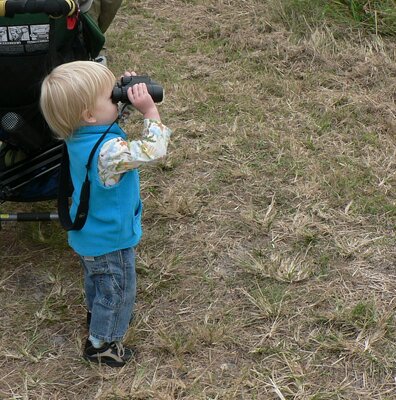
This activity at the new and beautiful Depot Park in downtown Gainesville is for young people 6 to 18 who are accompanied by a parent or guardian. We will walk the park looking for birds using binoculars. You must be registered to attend. Register at audubonyouthbirding@gmail.com.
Saturday, February 18, 2017 from 9 to 11 a.m.
Who are these people walking around with binoculars having so much fun?
And how do you get into the world of “Birding” anyway?
Scott Flamand, Alachua Audubon Vice-President, will share his delight and his expertise on this fascinating hobby.
Come. You won’t “egret” it!
Family Birding opportunity! Meet guide Adam Kent at the Thomas Center in downtown Gainesville (302 NE 6 th Avenue) on Saturday, April 8 at 9:00 a.m. We will walk the Thomas Center grounds, city streets, and the Duckpond area looking for city birds and animals. Binoculars will be available for use. Please register for this event at audubonyouthbirding@gmail.com . Be sure to bring water and a hat.