The Fall and Rise of the Bald Eagle
By Tonya Becker
Who among us hasn’t been captivated by iconic images of Bald Eagles majestically soaring through blue skies, diving for prey, or perched silently, keenly observing their environment from above? What a privilege to share space with these beautiful creatures! Revered for thousands of years by Native Americans as sacred spiritual messengers and treasured as avatars of wisdom, strength, and courage, these raptors hold a special place of regard in many indigenous cultures. In contrast, early European colonists felt very differently about the Bald Eagle. Despite embracing its image as an emblematic symbol of national strength and patriotism, the bird itself was considered a pest and threat; a source of fear, derision, and superstition, much like other native apex predators such as wolves, coyotes, and bears.
John James Audubon himself was known to despise Bald Eagles and considered them immoral and tyrannical, mainly due to their kleptoparasitic behaviors (opportunistic theft of fish from other birds, particularly Osprey). A vocal opponent of most birds of prey, with particular animosity toward Bald Eagles, he characterized them as “the dreaded enemy of the feathered race” and promoted the idea that they would steal babies and livestock. Unsurprisingly, these notions led to the wholesale slaughter of eagles in the United States for more than one hundred years. It was considered one’s civic duty to eradicate any Bald Eagle one might encounter.
 Recovery is Possible
Originally excluded from the Migratory Bird Treaty Act of 1918 (along with all raptors) due to prevailing negative opinions of them, eagles continued their precipitous population decline well into the 20th Century, largely from hunting and habitat loss and degradation. However, in the late 1930s, conservation voices began to speak up for both Bald and Golden Eagles, with the result that Congress passed the Bald Eagle and Golden Eagle Protection Act in 1940, which imparted broad protections to these important species. Unfortunately, the pesticide DDT was introduced in 1945, and by 1963 there were fewer than 500 breeding pairs of Bald Eagles in the lower 48. Rachel Carson’s revelatory book Silent Spring, published in 1962, documented the shocking effects DDT and other chemicals had on birds, fish, and more. It propelled a new wave of environmental concern and activism culminating in the eventual banning of DDT, the formation of the Environmental Protection Agency, and the passing of the Clean Water and the Endangered Species Acts. Bald Eagles were one of 73 species included on the very first list created by this act.
The measures included in these laws and policies were incredibly effective, resulting in the recovery of many species of flora and fauna that had dwindled to near-extinction numbers. So spectacular were the cumulative positive effects of these protections that in 1995, Bald Eagles were removed from the Endangered list, and by 2007 numbers had grown sufficiently to warrant removal from the Threatened Species list as well. Recent data estimates that 70,000 individual birds live in Alaska, and as many as 300,000 are in the lower 48 states. This is truly a remarkable example of an avian’s resilience when humans allow them to be undisturbed in an appropriate ecosystem. What a success story for conservation!
Florida: A Shining Example for Bald Eagle Conservation
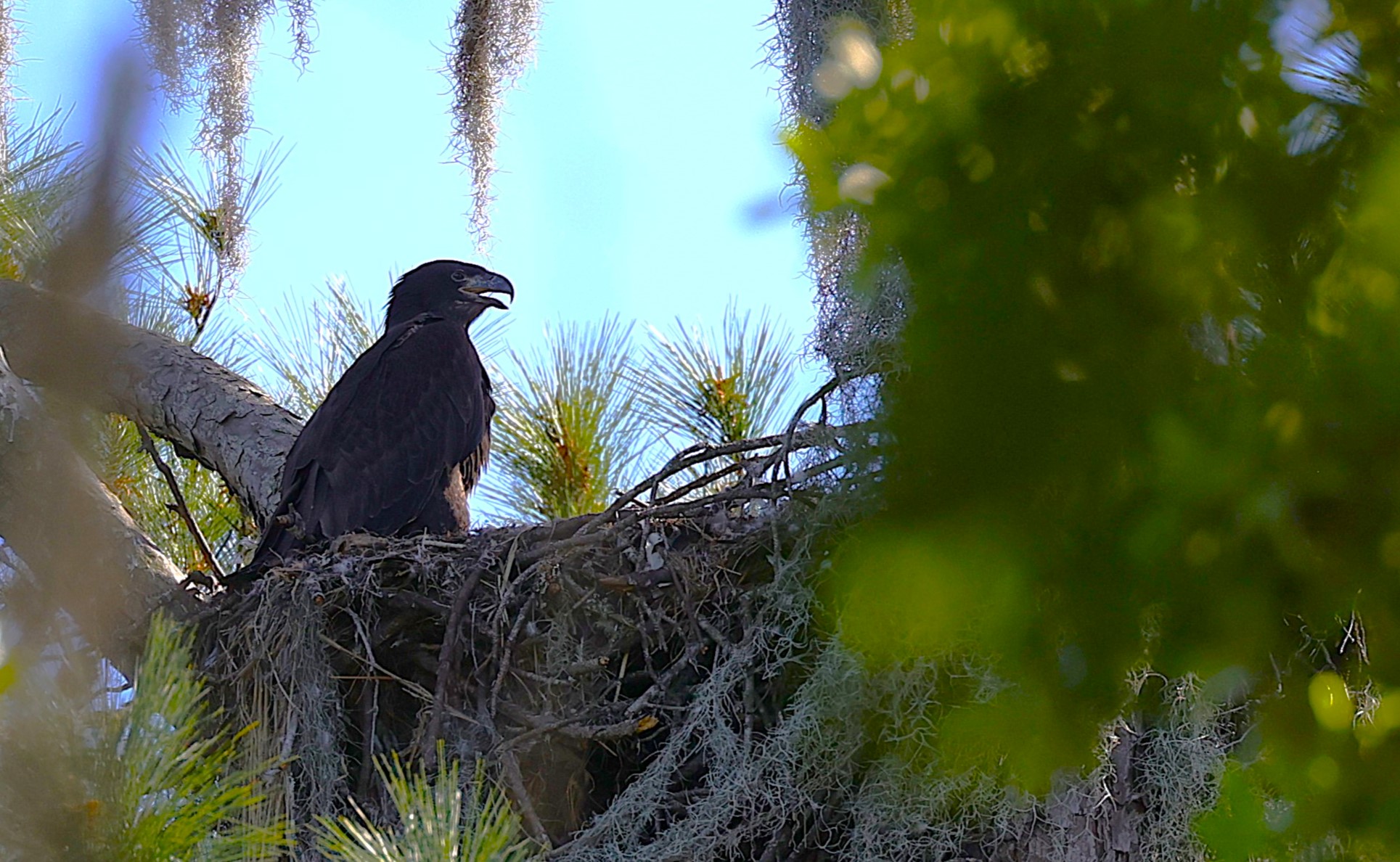
In the lower 48, Florida has one of the highest densities of breeding pairs of Bald Eagles, with a current estimate of 2500, compared to 88 in 1973. Strong site fidelity for nesting, highly specific tree requirements to support their tremendous nest structures (generally old-growth pine, but sometimes cypress, oak, or mangrove), and dependence upon large bodies of water for their primary food source are factors that place the bulk of these birds within 1.5 miles of shorelines. This can provide wonderful opportunities for viewing these beautiful birds as they go about their lives, which never ceases to thrill tourists and locals alike.
Recently, accelerated population growth of humans in Florida has meant rampant development and habitat loss, often along shorelines. This trend, paired with the similarly incredible population growth of the eagles, has meant that conflict between eagles and competition for both suitable trees and resources is increasing, frequently resulting in injuries and even fatalities. Fortunately, Bald Eagles have demonstrated a propensity for clever adaptability, with some pairs electing to nest on man-made structures such as large cellular towers. However, even these workarounds are under threat, as tower owners and operators are permitted to remove nests once eaglets fledge and also to remove the platforms to prevent re-nesting attempts in the future. In hopes of safeguarding our state’s large population of eagles, Audubon Florida maintains a constant presence– monitoring, studying, and advocating for these eagles through the EagleWatch program.
Audubon EagleWatch
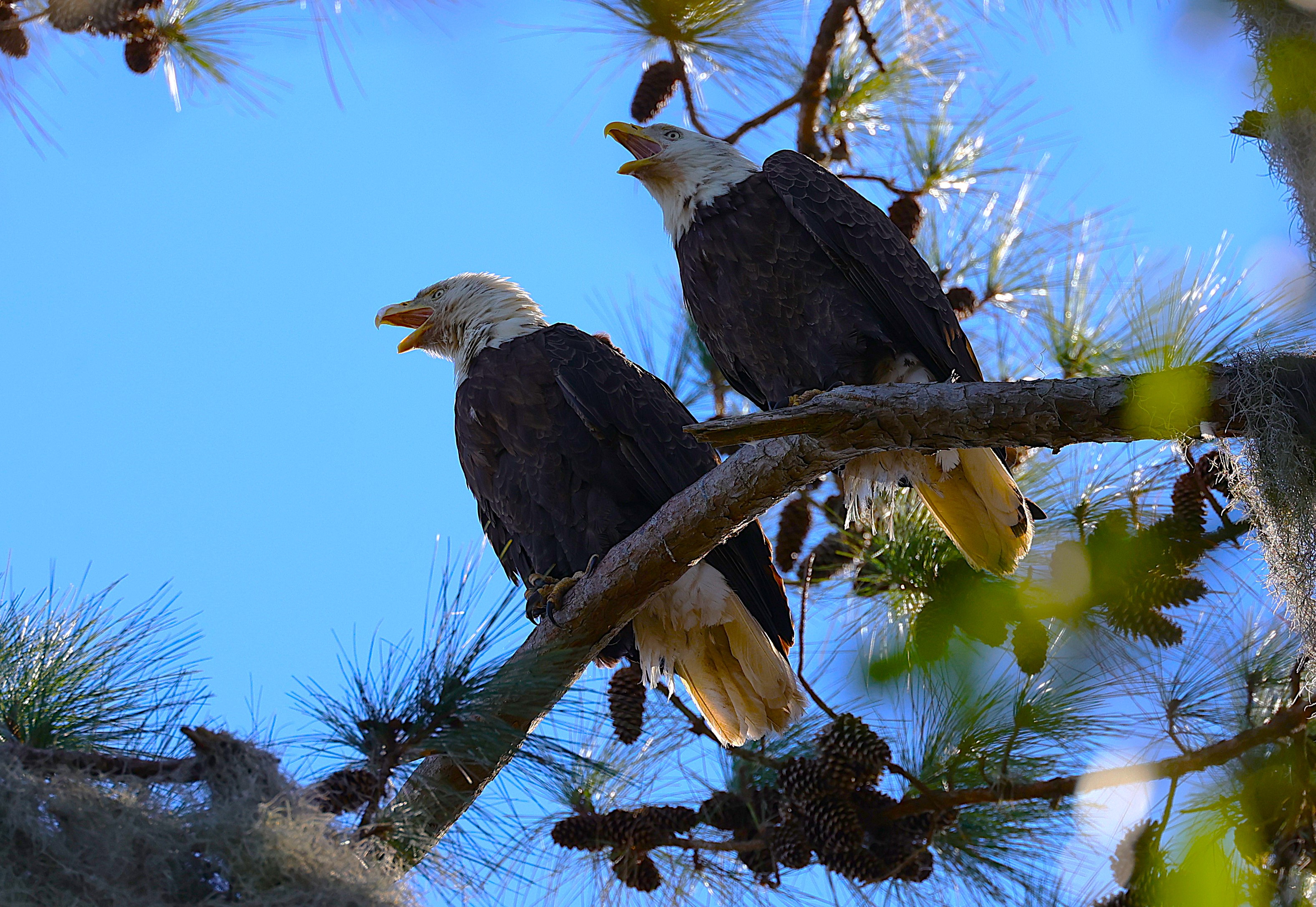
Audubon Florida began a community science initiative in 1992, comprised of 22 volunteers who monitored and documented Bald Eagle nests and worked with FWC and the USFWS to ensure the birds and their offspring were protected according to federal and state guidelines. In 34 years, the program has swelled to include more than 750 volunteers who monitor nearly 1500 active nests. A sophisticated ArcGIS database combines geographical information with nest data submitted by volunteers throughout the breeding season. This enables scientists to track trends in the population. This very important, on-the -ground work has led to enhanced state and federal policies protecting the species and has influenced land acquisition and conservation projects with the purpose of protecting nesting sites and key habitat.
Alachua County
With our many beautiful lakes and wetland prairie habitat, Alachua County is home to numerous pairs of breeding Bald Eagles. Local volunteers have had the privilege of witnessing many generations of eagles successfully rear their chicks. This past season, we were called by some neighbors about a nest on private property that seemed to be at risk. We were able to add the nest to our database and work with neighbors and FWC officials to ensure that this family was able to safely and successfully rear their chicks, who both fledged beautifully. The severe drought definitely impacted many of the eagles in the area, reducing food availability due to Payne’s Prairie and other bodies of water drying up, and several pairs either did not attempt or did not succeed in hatching eggs this year. The adults appeared healthy, though, so we hold hope for the future.
We are looking for more volunteers to monitor local bald eagle nests for next season, which begins in October. Happily for us, our eagles breed in the winter and raise their chicks through the spring, so we get to be out in the most gorgeous weather Florida has to offer while we monitor nests. Nest monitoring requires a commitment of a couple of hours per week or every other week, from October to May. If you would like more information or to volunteer, reach out to us at: contact@alachuaaudubon.org